
Welded Puddle Pipe
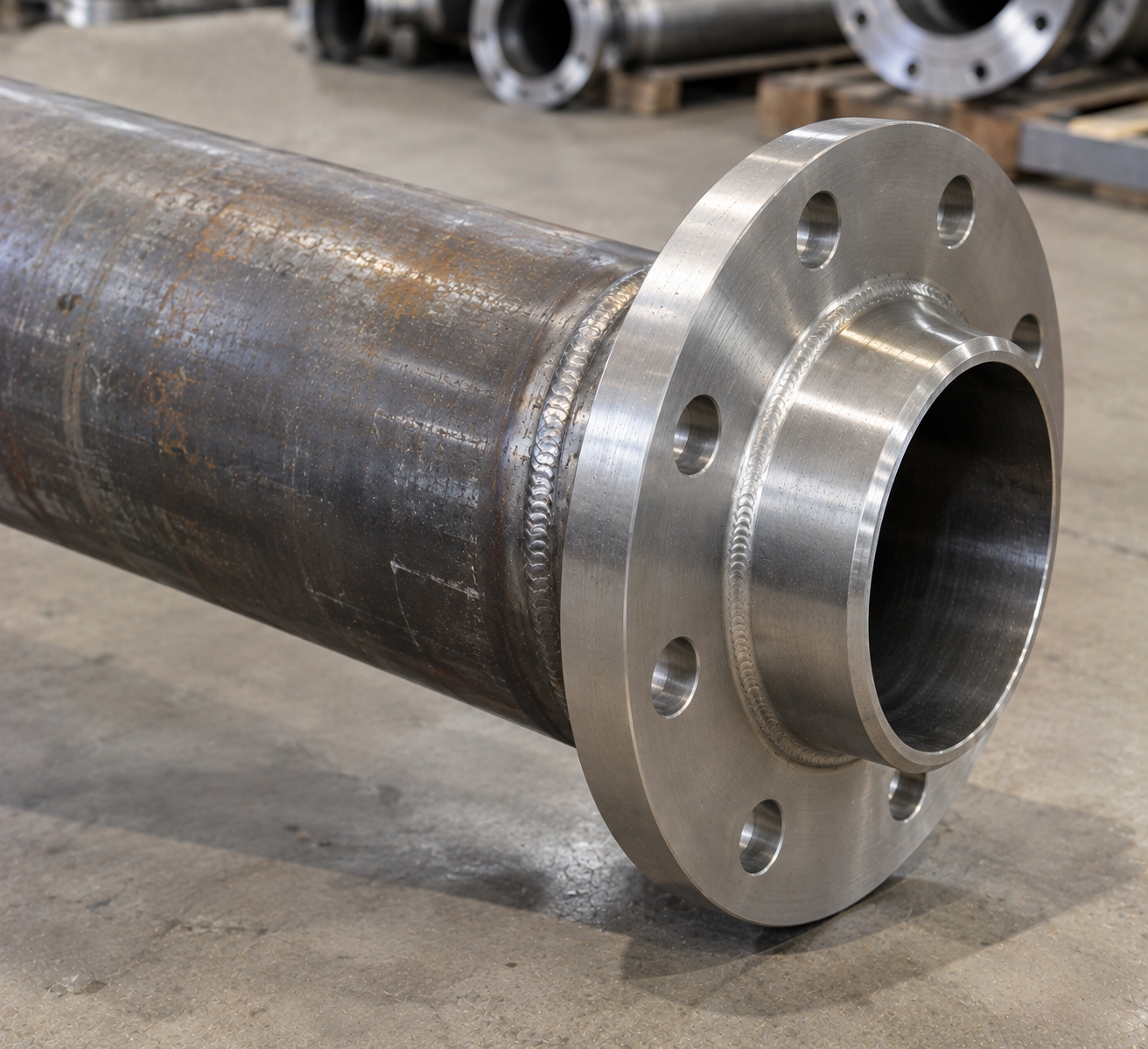
A compatible plate is welded around a metal pipe spool at the required embedment position before delivery.
A pipe puddle flange combines a carrier pipe or sleeve with a projecting water-stop plate at a concrete penetration. Moreover, Mesta Inc. manufactures each assembly to the specified material, pipe dimensions, plate geometry, end connections and inspection scope.
A pipe puddle flange is a fabricated penetration assembly with a water-stop plate fixed around its outside surface. The plate projects into a concrete wall, slab or tank. Consequently, it lengthens the potential seepage path along the pipe-to-concrete interface.
The water stop forms only one part of the complete penetration system. Reliable performance also depends on the attachment detail, concrete quality, compaction, movement design and any specified joint waterproofing.
The assembly may use carbon steel, stainless steel, nickel alloy or a compatible polymer. Therefore, the order must identify the exact material, pipe standard, size, wall thickness and joining method.
A complete specification defines the carrier pipe, plate and attachment together. Accordingly, provide these details.
| material grade | Governing material standard, grade, product form and required certificates. |
|---|---|
| Pipe details | Nominal size, actual OD, bore, wall thickness, material and end preparation. |
| Plate geometry | Outside diameter or width, opening, radial projection, thickness and shape. |
| Collar or sleeve | Length, bore, wall thickness, fit and plate centreline or offset. |
| Concrete interface | Wall thickness, embedment location, cover, reinforcement clearance and projections. |
| Jointing method | Extrusion weld, butt fusion, electrofusion or another drawing-approved connection method. |
| Service limits | Design pressure, operating temperature, conveyed medium and external exposure. |
| Quality documents | Material records, dimensions, fusion records, inspection reports and release documentation. |
Standards note: list the exact pipe, material, joining and inspection standards in the order. Procurement teams can consult the official ISO standards catalogue when confirming published documents.
The correct arrangement depends on the pipe system and construction sequence. As a result, Mesta Inc. reviews each item from the approved drawing.
A compatible plate is welded around a metal pipe spool at the required embedment position before delivery.
A separate collar fits around the nominated pipe and receives the drawing-defined mechanical, welded or fused connection.
A fabricated sleeve creates a reserved opening and carries an integral plate within the concrete.
The flange profile can follow the structural detail, provided its opening, projection and clearance are defined.
The material controls the permitted attachment method, corrosion protection and service limits. Consequently, every joining procedure must match the pipe and plate specified on the approved drawing.
A water-stop plate can be extrusion-welded continuously around a compatible pipe under an approved procedure.
A prefabricated section can join the pipeline through controlled butt fusion.
Approved couplers may connect the assembly where layout and installation conditions permit.
The flange projection, embedment position and concrete consolidation work together to interrupt seepage.
Design note: confirm material compatibility before welding, fusion or mechanical attachment. In addition, treat pressure joints and the concrete water stop as separate design functions.
Start with the penetration function and environmental exposure. Then, confirm fabrication and installation requirements.
A controlled manufacturing sequence supports dimensional accuracy, joint continuity and material traceability.
First, verify the material grade, pipe dimensions, plate geometry, end connections and joining requirements.
Next, prepare the opening, outer profile and sleeve components within specified tolerances.
Then, set the plate square to the pipe at the drawing-defined centreline or offset.
Use the approved process while controlling heat, bead profile, continuity and workmanship.
Afterwards, clean the fabrication and apply the specified jointing or surface-preparation system.
Finally, verify dimensions, fusion joints, surface condition, identification and documentation.
Accurate positioning and concrete consolidation help the component perform as designed.
For a detailed pre-pour sequence and inspection checklist, see the puddle flange installation guide.
The inspection plan should cover material, fabrication and surface protection. In addition, the final records should match the component to its drawing revision.
Confirm the specified material grade, product form, markings and certificates.
Measure pipe fit, plate OD or width, thickness, opening and embedment position.
Review visual workmanship and complete additional NDT only when the order requires it.
Check bead geometry, fusion records, dimensions, damage and permitted repairs.
Fabricated pipe water stops can suit water, drainage and industrial infrastructure when the material and dimensions match the service. For example, applications include:
Application limit: chemical resistance varies with concentration and temperature. Therefore, the project engineer should approve the material grade for the stated medium and operating conditions.
For an accurate technical review and quotation, provide:
It is a pipe or sleeve with a projecting plate at a concrete penetration. The projection helps interrupt the direct seepage path along the pipe-to-concrete interface.
Options may include carbon steel, stainless steel, nickel alloys and compatible polymers. State the exact grade and product standard in the order.
Material performance depends on the selected pipe grade, so conventional anticorrosion paint is usually unnecessary. However, the project must still assess UV, chemical and temperature exposure.
Yes, when the pipe and plate materials are compatible with the approved welding, fusion or mechanical procedure. The fabricator must control joint continuity and geometry.
Yes. Specify the flange standard, pressure class, facing, drilling, material and orientation for each end.
Yes, subject to drawing and fabrication review. Provide the pipe OD, wall thickness, plate geometry, assembly length, material and quantity.
Send the drawing, exact material grade, pipe and plate dimensions, jointing method, quantity, inspection and delivery requirements.
Send Mesta Inc. your drawing, material grade, dimensions and protection requirements. Then, our team can review fabrication, inspection and delivery scope.