
Fixed Puddle Flange
A fixed puddle flange uses a permanent plate at a predetermined position on a new pipe or sleeve.
A puddle flange from Mesta Inc. creates a dependable water stop around a pipe that passes through concrete. First, confirm the pipe and structure; then, select the plate geometry, material, connection ends and inspection scope for the puddle flange assembly.
A puddle flange is a water-stop plate fitted around a pipe or sleeve where it passes through concrete. Because the plate projects beyond the pipe surface, it interrupts the direct path that water could follow through the pipe-to-concrete interface.
Therefore, engineers specify these components for tanks, walls, slabs, foundations, pits and treatment structures. The finished product may consist of a separate collar or a complete fabricated pipe assembly with project-defined ends.
Mesta Inc. manufactures each item from an approved drawing or complete dimensional enquiry. Consequently, buyers can define the pipe, water-stop plate, material, connection ends, coating, inspection and documentation.
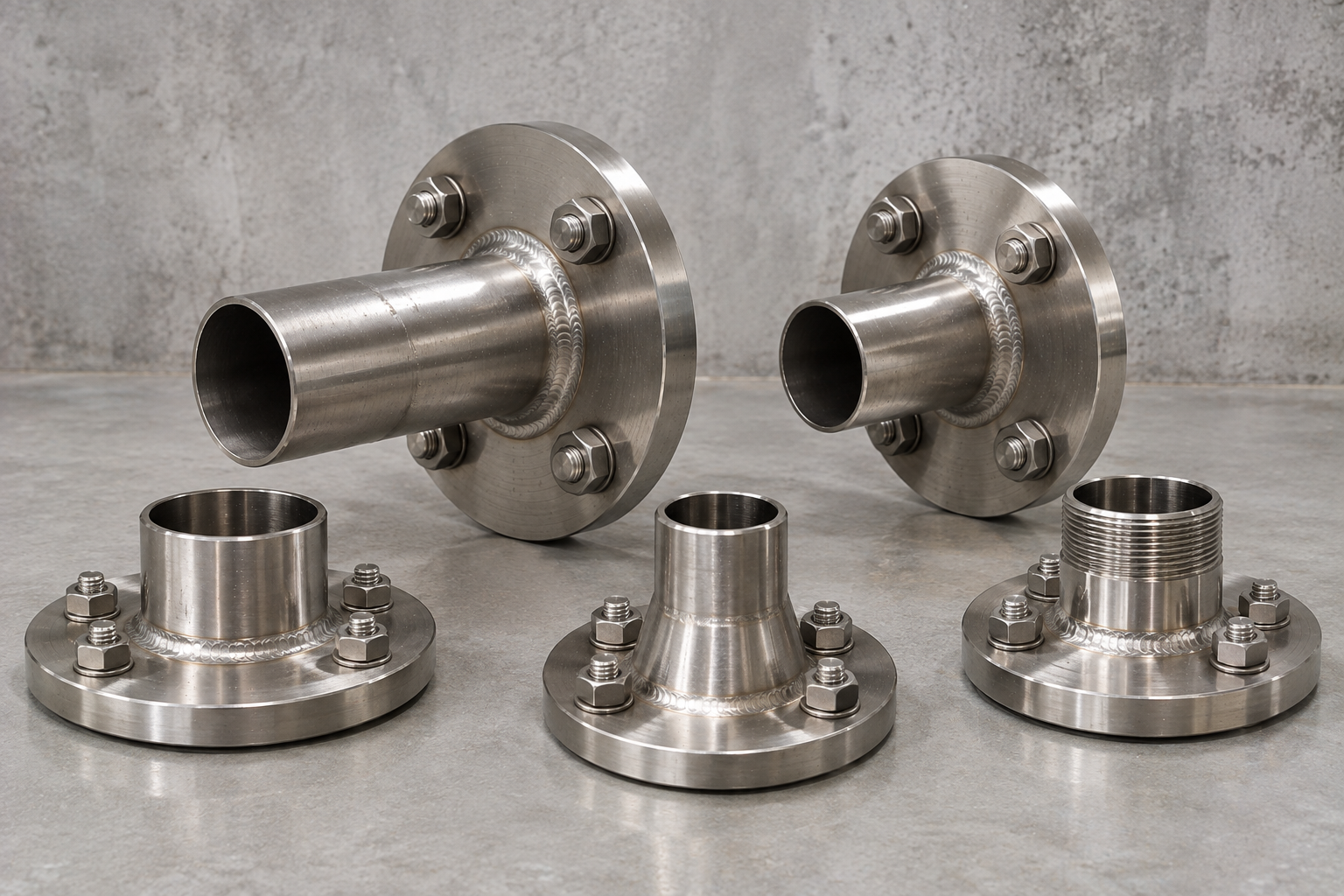
A nominal pipe size does not define the complete product. Therefore, every quotation should confirm the pipe system, water-stop geometry and connection details.
| Pipe size | Project-defined nominal size plus confirmed actual outside diameter. |
|---|---|
| Pipe wall | Schedule, SDR, pressure class or actual wall thickness according to the pipe material. |
| Water-stop plate | Outside diameter or width, radial projection, thickness, profile and pipe opening. |
| Plate position | Drawing-defined location along the pipe and within the concrete wall, slab or tank. |
| Materials | Mild steel, carbon steel, stainless steel, PE, HDPE, PVC or project-approved alloy. |
| Assembly length | Length based on concrete thickness, internal projection, external projection and joint access. |
| End connections | Plain, bevelled, threaded, socket, spigot, single-flanged or double-flanged. |
| Surface finish | Project-specified paint, galvanizing, passivation or compatible protective treatment. |
| Inspection | Material, dimensions, attachment, welds, coating and testing according to the approved plan. |
| Documentation | Material certificates, weld/NDT reports, dimensional records and release documents as agreed. |
Size note: Nominal metric and inch descriptions may use different physical outside diameters. Therefore, provide the pipe standard or measured OD with the enquiry.
Installation access and pipe configuration determine the appropriate design. Consequently, compare these principal options.
A fixed puddle flange uses a permanent plate at a predetermined position on a new pipe or sleeve.
By contrast, position-adjustable designs provide defined flexibility before final securing.
For existing pipes, split and loose options may suit restricted-end-access conditions.
A fabricated penetration assembly combines the water stop, pipe and specified end connections.
For a broader comparison, review our design and material guide.
The correct material depends on the pipe, conveyed medium, surrounding environment, joining method and service life. Therefore, compare these common categories:
These materials offer flexible fabrication. However, the project should specify corrosion protection for the exposure.
Corrosion-resistant steel options may suit wet, hygienic or aggressive environments.
Polyethylene options require the correct PE grade, SDR, OD and fabrication method.
Special alloys may suit demanding chloride or chemical exposure when the project specifies them.
Selection note: Material compatibility alone does not complete the design. Also confirm plate geometry, attachment, movement, concrete clearance and end connections.
A controlled sequence connects approved dimensions with material identity, fabrication and site position.
First, confirm pipe data, plate dimensions, assembly length, ends and inspection requirements.
Next, match pipe, plate, fitting and flange materials with the approved bill of materials.
Then, cut the pipe and plate and prepare all required openings, edges and connection ends.
Fabricators set the water-stop position and complete the approved welded, bonded or mechanical attachment.
Afterwards, inspectors check dimensions, joints, ends, surface treatment and identification.
Finally, installers support the assembly while workers consolidate concrete around the complete plate.
Inspection should address the manufactured product and its final position before concrete placement. Accordingly, typical checks include:
First, markings and certificates connect each component with the approved specification.
Next, inspectors verify pipe OD, length, plate geometry, position and connection orientation.
Moreover, the team checks the specified weld, bond, clamp or mechanical joint.
Finally, site personnel verify line, level, support, reinforcement clearance and concrete access.
Projects use embedded water stops wherever pipes pass through concrete exposed to stored water, groundwater or wet service. For example, applications include:
For the water-stop design context, review our pipe-penetration waterproofing guide. In addition, the independent WBDG below-grade systems guide explains broader moisture-control considerations for concrete structures.
Send a drawing or provide the following information for an accurate technical and commercial review:
It is a projecting water-stop plate around a pipe or sleeve embedded in concrete. The plate helps interrupt water movement along the pipe-to-concrete interface.
Projects use it in tanks, walls, slabs, basements, pits, treatment structures and other concrete pipe penetrations.
The central water-stop plate does not connect pipes. However, a complete assembly may include separate end flanges, sockets, spigots or other connections.
Options may include mild steel, carbon steel, stainless steel, PE, HDPE, PVC, duplex and project-approved special alloys.
Confirm the actual pipe OD, wall, plate dimensions, concrete thickness and assembly length instead of relying only on nominal size.
No. It controls the embedded pipe interface, while membranes, waterbars, linings and pipe-joint seals address other leakage paths.
First, send the drawing or pipe data. Then, include the plate geometry, material, connections, finish, inspection, quantity and delivery requirements.
Send Mesta Inc. your pipe dimensions, puddle plate details, material, drawing, quantity, inspection scope and delivery requirements. Then, our team will review the enquiry and confirm the appropriate manufacturing scope.