
110mm PVC or uPVC Pipe
Provide the pipe standard, pressure class and measured OD. In addition, specify the approved method for joining the water-stop component to the plastic pipe.
Mesta Inc. manufactures 110mm puddle flanges for compatible PVC, uPVC, HDPE and metallic pipe systems. First, we verify the actual pipe outside diameter; then, we manufacture the water-stop plate and assembly to the approved wall-penetration detail.
Concrete does not always create a dependable seal against a smooth pipe surface. Consequently, water can follow the interface between the pipe and concrete when the penetration faces groundwater or stored water.
A 110mm puddle flange adds a projecting water-stop plate around the pipe. Therefore, the plate creates an extended obstruction through the concrete and helps control seepage around the penetration. The project designer determines the required plate projection, thickness and location.
Unlike a standard bolted flange, the central puddle plate does not connect two pipe ends. Instead, it remains embedded in the concrete. However, a complete puddle flange pipe assembly may also include flanged, plain or other specified end connections.
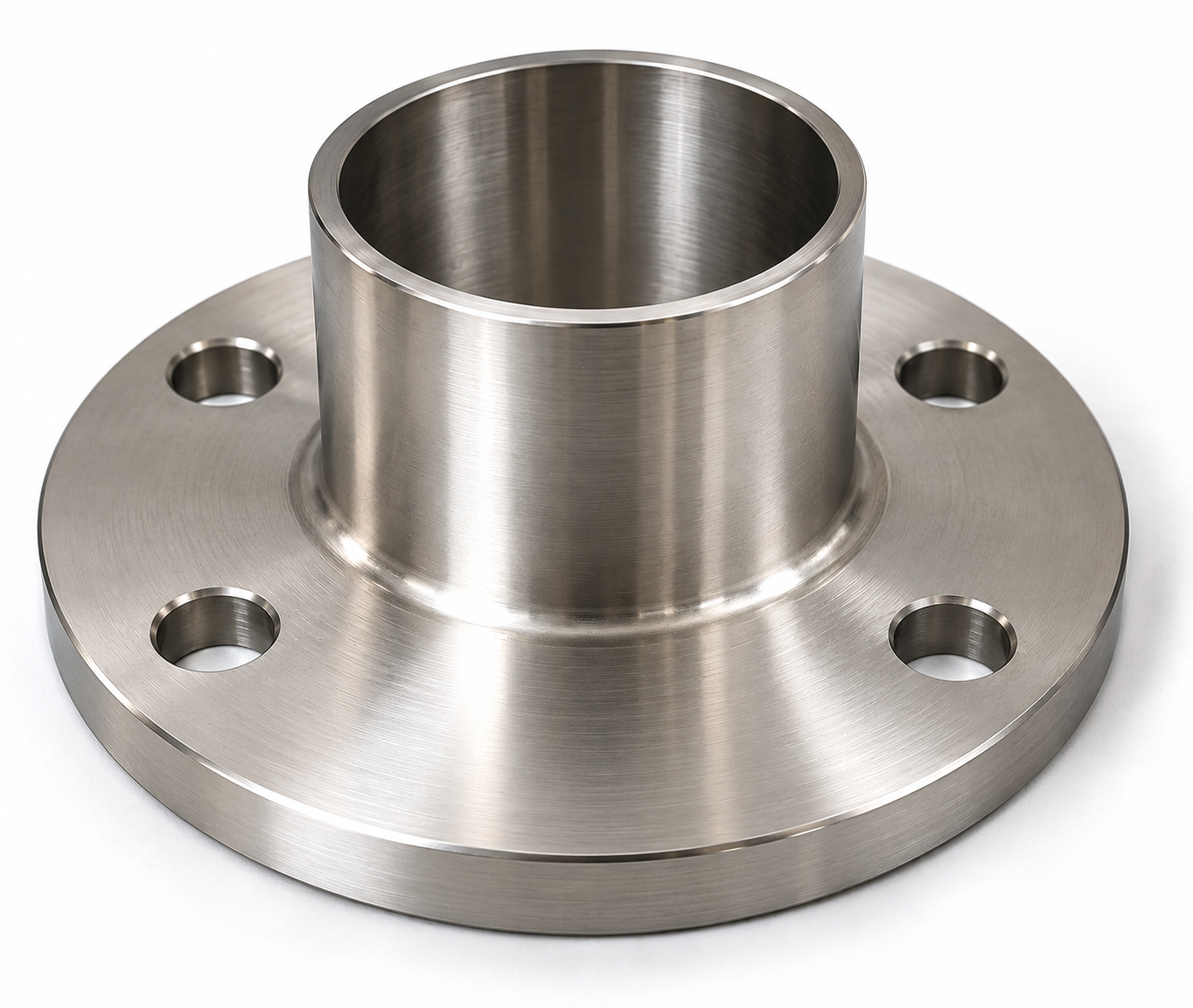
A supplier cannot determine every finished dimension from “110mm” alone. For example, the label may describe an outside diameter in one pipe system but a nominal designation in another. Therefore, Mesta Inc. reviews the pipe standard and penetration drawing before confirming production dimensions.
| Pipe identification | 110mm designation plus the pipe material, dimensional standard and confirmed outside diameter. |
|---|---|
| Pipe wall | Plastic-pipe SDR or pressure class; alternatively, metallic-pipe schedule or specified wall thickness. |
| Water-stop plate OD | The approved drawing defines the total plate diameter or required radial projection beyond the pipe. |
| Plate thickness | The project designer specifies the thickness according to material, fabrication method and penetration detail. |
| Plate position | Centre or drawing-defined location within the wall or slab, with suitable concrete cover and clearance. |
| Assembly length | Project-defined length based on wall thickness, accessible pipe ends and connection requirements. |
| Base materials | PVC, uPVC, HDPE, mild steel, carbon steel, stainless steel or another approved material. |
| Attachment method | Material-compatible fabricated, welded, bonded or mechanical arrangement as the approved design specifies. |
| End details | Plain, socket, spigot, bevelled or flanged ends when the complete assembly requires them. |
| Inspection records | Dimensional, material, joint, coating and other agreed records according to the purchase order. |
Size note: Do not assume that every product described as a 110mm puddle flange fits every 110mm pipe system. In fact, PVC, uPVC, HDPE and metallic pipes can follow different dimensional standards. Therefore, provide the pipe material, standard and measured OD with your enquiry.
The actual pipe OD provides the starting point, but material also affects the attachment method and system performance. Consequently, the RFQ should identify both the pipe material and its dimensional standard.
Provide the pipe standard, pressure class and measured OD. In addition, specify the approved method for joining the water-stop component to the plastic pipe.
State the PE grade, SDR and OD. Moreover, account for the selected fabrication method and any movement that the penetration design must accommodate.
For steel construction, define the material grade, wall thickness, assembly length, weld requirements and corrosion-protection system.
Where corrosion conditions demand it, specify the stainless grade, finish, welding controls and required material documentation.
For metal options, compare our stainless steel puddle flanges and mild steel puddle flanges.
The water-stop plate must suit both the pipe and the concrete penetration. Therefore, the approved detail should resolve the following design points:
Engineering responsibility: The project designer determines the water-stop geometry, structural clearances, material suitability and waterproofing detail. Afterwards, Mesta Inc. manufactures the product to the approved drawing.
The installation team should coordinate the penetration before fixing reinforcement and formwork. As a result, suitable supports can hold the pipe in alignment while workers place concrete around the water-stop plate.
First, verify the pipe route, wall thickness, penetration level, plate position and connection allowances.
Next, confirm the pipe OD, plate dimensions, joint condition and material identification before installation.
Then, position the 110mm assembly to the required centreline and maintain its orientation.
Secure the pipe independently so reinforcement work, formwork and concrete placement do not move it.
Afterwards, place and consolidate concrete around the plate without leaving voids or disturbing alignment.
Finally, inspect and protect the exposed ends before completing the specified connection and testing work.
Inspection should focus on fit, water-stop geometry and the integrity of the selected attachment method. Therefore, the order should define measurable acceptance criteria.
Inspectors compare the confirmed pipe OD with the puddle flange bore and approved fit requirement.
They also check plate OD, projection, thickness, position and alignment against the penetration drawing.
Depending on the material, the team examines the fabricated, welded, bonded or mechanical attachment.
Finally, inspectors confirm product marking, exposed-end protection and any specified surface treatment.
The 110mm size commonly aligns with plastic drainage and utility pipe systems. Nevertheless, the designer must verify the precise OD and suitability for each project. Typical locations include:
Furthermore, application-specific buyers can review our pages for water-tank puddle flanges, concrete-wall penetrations and drainage puddle flanges.
To avoid a size mismatch, identify the pipe system before sending the remaining assembly details:
A 110mm puddle flange is a water-stop component for a compatible pipe that passes through concrete. Specifically, its projecting plate helps interrupt water movement along the pipe-to-concrete interface.
No. Pipe materials and dimensional standards can use different conventions. Therefore, provide the material, standard and measured OD instead of relying only on the 110mm label.
Yes, subject to design review. First, provide the pipe standard, pressure class and measured OD. Then, specify the approved material and attachment method for the water stop.
Yes, subject to fabrication feasibility. Provide the PE grade, SDR, actual OD, penetration drawing and approved joining requirement.
The project designer should define the plate OD, projection and thickness. Consequently, Mesta Inc. manufactures the component to the approved drawing rather than applying one universal plate size.
The approved penetration detail determines its position. Although many designs place the plate within the central region, reinforcement, cover and project requirements may affect the final location.
First, send the pipe material, standard, actual OD, SDR or wall thickness. Next, include the plate dimensions, wall thickness, assembly length, end details, quantity and drawing.
Send Mesta Inc. your pipe dimensions, puddle plate details, material, drawing, quantity, inspection scope and delivery requirements. Then, our team will review the enquiry and confirm the appropriate manufacturing scope.